Introduction and Key Points

What is PCC1?

Procyanidin C1 (PCC1) is a natural polyphenol found within the procyanidin family, a group of dozens of compounds found in grape seed extract. In the procyanidin family, PCC1 is the key compound that is uniquely effective at clearing senescent cells—often called "Zombie cells." These are toxic, aged, and damaged cells that linger in the body and secret toxins that drive systemic inflammation and accelerate aging. Current literature points to PCC1 as being the most potent naturally-occuring senolytic compound that we have identified.

The Lonvi PCC1 Difference: Potency + Absorption

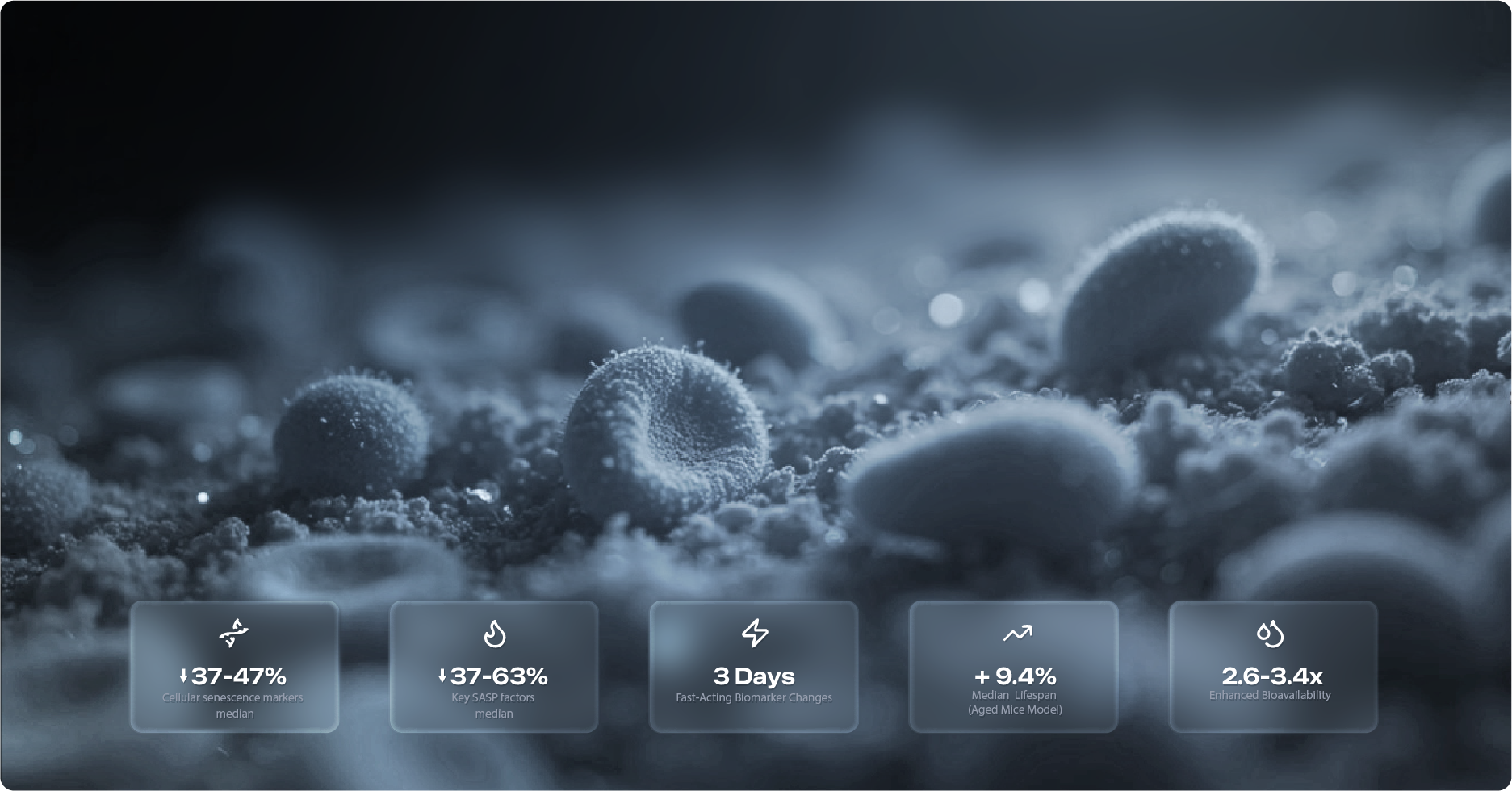
Standard grape seed extracts typically contain only 0.6% PCC1 and are notoriously difficult for the body to absorb. Lonvi has pioneered an extraction method that concentrates active PCC1 to 20% (30x the standard strength). Lonvi has also engineered a phytosomal shield that improves absorption by 6x–10x. The result? A single regimen of Lonvi PCC1 provides the equivalent PCC1 absorption of consuming one metric ton of grapes.

PCC1 Effects on Humans and Longevity in Mice

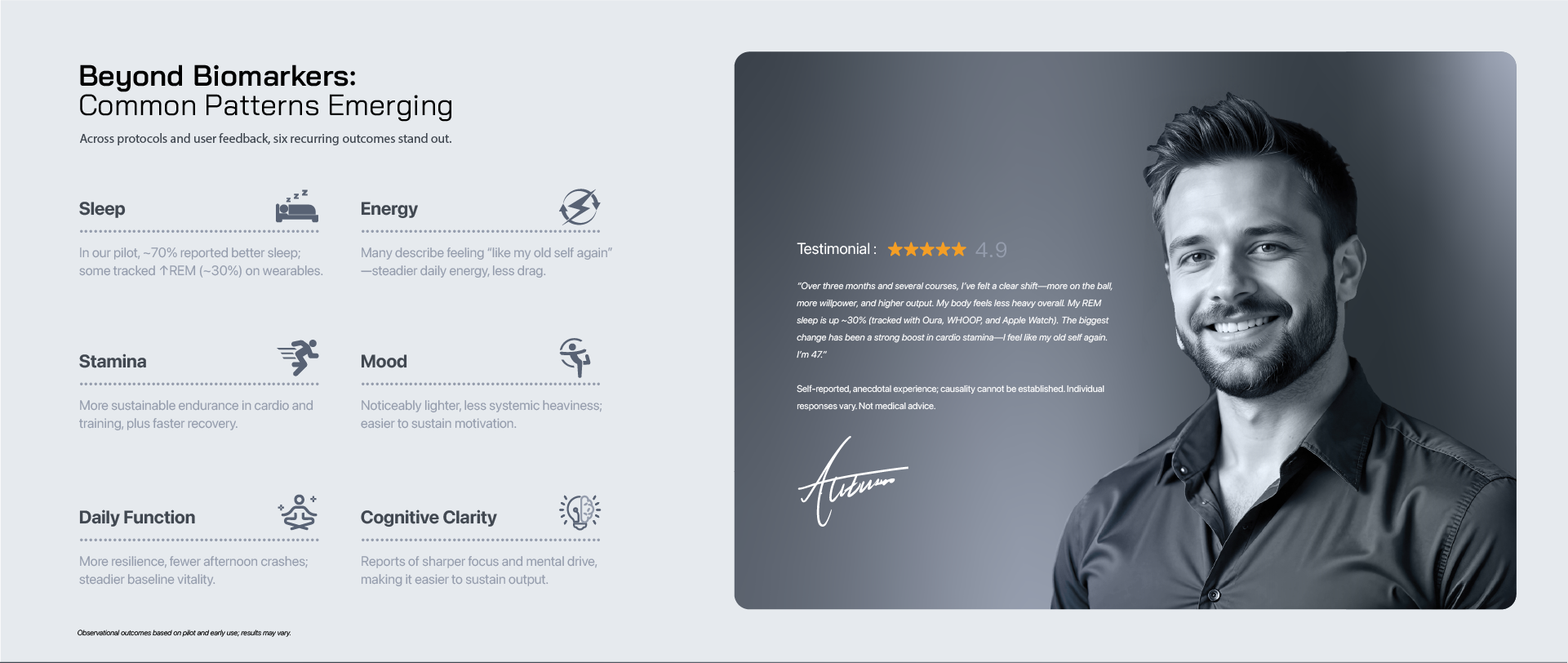
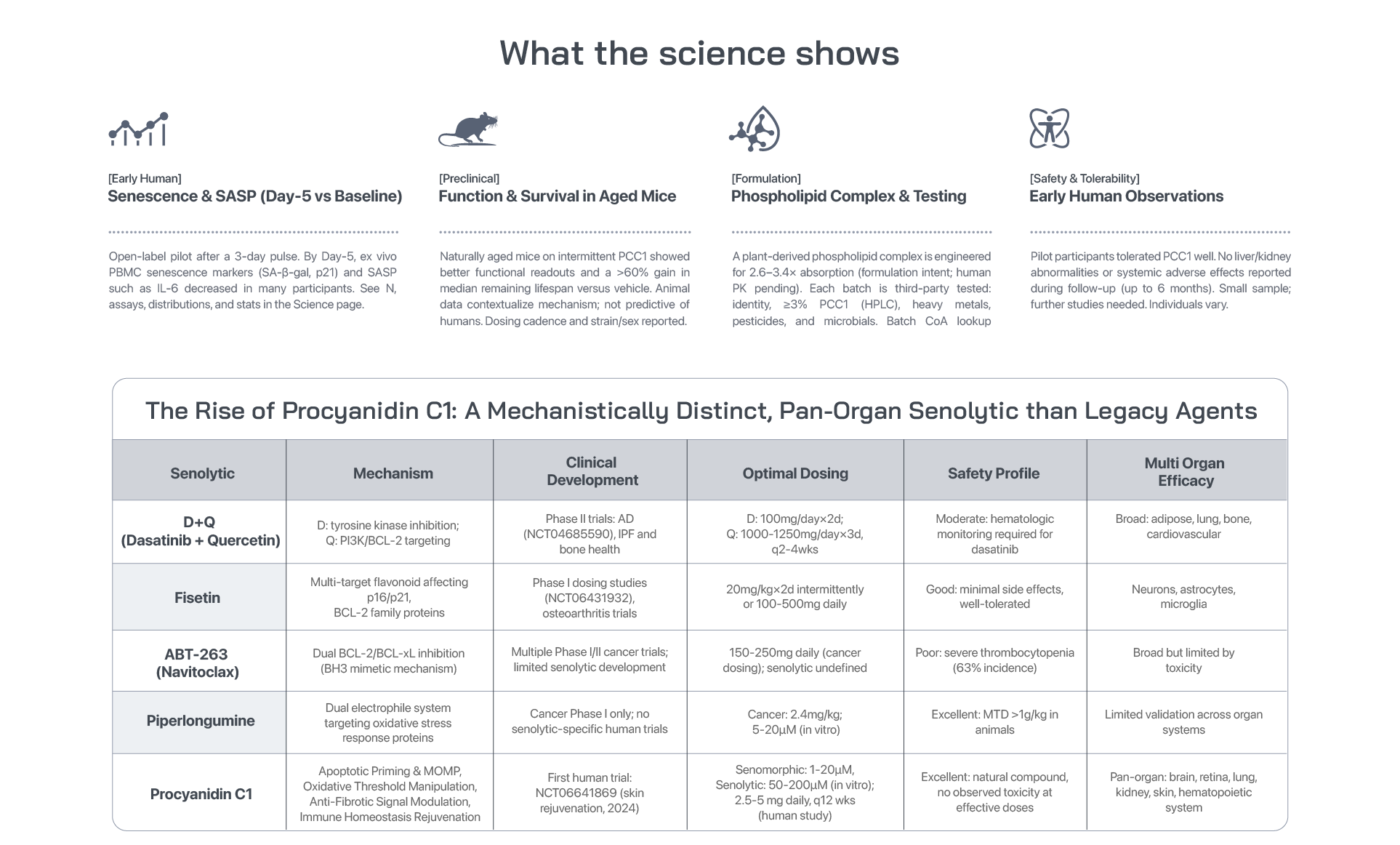
In human studies, Lonvi PCC1 significantly reduced toxic inflammatory signals. Key biomarkers, including SASP factors (IL-6 and IL-8) and senescent markers (p21 and SA-β-gal), were lowered by 25–75%. These markers are the primary drivers of chronic systemic inflammation and biological aging. No other natural compound has demonstrated a comparable reduction in these inflammatory signals. Furthermore, groundbreaking research in mice showed that PCC1 extended the remaining lifespan of aged subjects by over 60%.

Strong Safety Profile

Unlike other synthetic or natural senolytics, PCC1 is a plant-derived polyphenol with an strong safety and tolerance profile. Research published in leading longevity journals indicates that PCC1 produces no toxicity in vital organs. Instead, animal studies have shown it may actually restore function in the brain, kidneys, intestines, and liver. Human studies confirm that Lonvi’s PCC1 high-potency formulation is remarkably well-tolerated, with participants reporting little to no negative side effects.

Early-Stage Human Data

We share results from an early human study, where selected biomarkers were measured before and after short-term supplementation. Significant reduction in inflammation markers, such as p21 and IL-6, were observed. These results are preliminary and are currently under peer review. The purpose of sharing is transparency, not to declare medical conclusions. Lonvi Bioscience Laboratory is working toward publishing more research on PCC1, including larger and controlled studies, in order to confirm these findings.

View Research Data